
Lowboy trailer heavy equipment transport
Old-school lowboy (low bed) moves for tall, dense machinery that outgrows a step deck. We drop into the well, clear bridges and wires, and set permits, escorts, and surveys before a driver rolls.
What is a lowboy trailer?
Detachable neck, deep well, and lower deck height to move excavators, dozers, cranes, and industrial skids that exceed step deck height.
Why low bed vs step deck?
Use a lowboy when height and concentrated weight demand a well and lower center of gravity; keep step decks for tall but lighter, evenly spread loads.
Permits + escorts handled
Oversize/overweight permits, bridge notes, pilot cars, police, and utilities coordinated by the same heavy-haul desk you call.
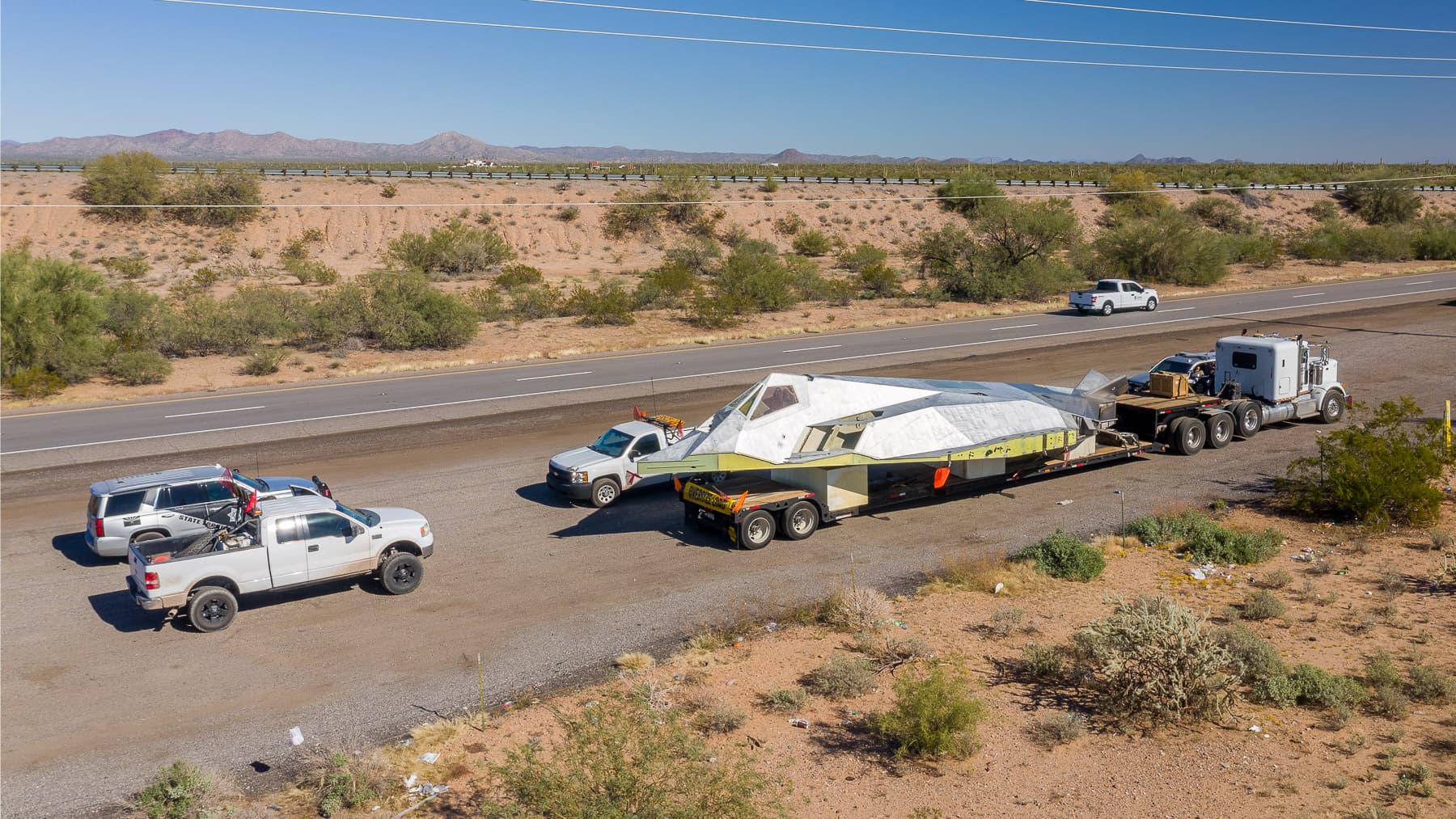
Real move: lowboy double-drop hauling a stealth bomber to a museum—detachable neck, deep well, permits, and escorts handled before dispatch.
30 years in freight
Experience across flatbed, step deck, RGN, and heavy haul lanes.
Open-deck specialists
We match the right trailer, securement, and permits before dispatch.
Responsive updates
You get status, driver info, and quick replies without chasing.
Lowboy basics
What is a Lowboy Trailer?
A lowboy (low bed, lowboy trailer) runs a detachable neck and deep well to carry tall, heavy equipment while staying under bridges and wires. By keeping the deck height lower than a step deck, it protects center of gravity, clearing utilities and structures that would force escorts or re-routes on taller trailers.
We still run every lowboy move like a heavy-haul job: dimensions verified, axle spacings noted, bridge constraints checked, and utilities or escorts pre-arranged. If attachments or stacks need to come off, we schedule the yard, rigging, and labor before the trailer arrives so the driver loads once and rolls.
Trailer choice
When to Use Lowboy vs Step Deck vs RGN
Choose a lowboy trailer when height and concentrated weight need a well and lower center of gravity. Stick with a step deck for tall but balanced freight that can stay on a raised deck without escorts. Move to an RGN or multi-axle configuration when the load is extremely tall, front-heavy, or triggers superload thresholds.
If it tips to another trailer
We swap to step deck or RGN early if the freight allows it. You get the reasoning, the permit impact, and the routing notes before drivers are booked.
Choose lowboy / low bed when
- • Height and weight push beyond step deck comfort
- • Excavators, dozers, cranes, and pavers need a well
- • Center of gravity must stay low for stability
- • Bridge or wire clearances are tight
- • Multi-axle spreads may be needed
Stick with step deck when
- • Tall but balanced loads fit without a well
- • Drive-on/off matters but height stays manageable
- • You want fewer escorts versus full lowboy height
- • Yard-to-yard moves need faster turns
- • Weight spreads evenly across the deck
Load fit
Common Lowboy Loads
Lowboy trailers shine on heavy equipment that runs tall, concentrated, or awkward through turns. We line up ramps, winch, cribbing, and escorts so the driver loads once and keeps rolling.
Moving a crawler or truck-mounted drill rig? See drill rig hauling for mast-height and loading planning.
Permits, escorts, route planning
We run the lowboy plan before dispatch
We quote with permits, escorts, and surveys already mapped. That means bridge notes, wire clearance, turn studies, and timing windows are settled before the driver leaves the yard. If the route tips to superload, we flag it early and align police, utilities, and curfews.
For tight approaches, we pre-call sites about ground conditions, gate widths, and overhead risks. When needed, we stage cranes, forklifts, or labor so attachments come off cleanly. You get the contact list, photos, and cadence we will use—no surprises.
Lowboy freight quote
Tell us origin, destination, timing, dimensions, weight, axle spacings if you have them, and site constraints. We return a lowboy / low bed plan with trailer setup, routing notes, and permit timelines.
Lowboy freight quote
Ready to move with a lowboy trailer?
We size the low bed or RGN, map the route, and set permits before dispatch—so you load once and go.
FAQ
Lowboy trailer / low bed FAQ
What is a lowboy trailer?>
A lowboy (low bed) is a detachable-neck trailer with a deep well that keeps tall, heavy equipment as low to the ground as possible for bridge and wire clearance.
When do you choose lowboy vs step deck?>
Lowboys win when height and concentrated weight need a well and lower center of gravity. Step decks are for tall but lighter or evenly distributed loads that do not need a well or detach.
Do you handle permits and escorts for lowboy loads?>
Yes. We secure oversize/overweight permits, coordinate escorts and police when required, and pre-wire utilities when clearances are tight.
Can you load drive-on equipment to a lowboy?>
Yes. We plan ramps, winch support, and site labor as needed. If attachments or stacks must come off, we schedule that before the trailer arrives.
What equipment fits a lowboy best?>
Excavators, dozers, loaders, pavers, cranes, drill rigs, scrapers, and tall industrial skids that exceed step deck height limits or need deeper wells.
Do you provide updates and photos?>
You get pre-roll photos, dispatch contacts, and en-route updates from the same desk that quoted the lowboy move.
How fast can I get a lowboy quote?>
Same day in most cases. Share origin/destination, dims, weight, axle spacings if known, and timing—our heavy-haul desk replies quickly.
Coverage, claims, safety
- Insured coverage: Loads are covered per carrier policies; certificates available on request.
- Claims support: If issues arise, we help gather documents and communicate with carriers quickly.
- Safety first: Securement, routing, and site access are planned up front to reduce risk.
Insured coverage
Loads are covered per carrier policies; certificates available on request.
Claims support
If issues arise, we help gather documents and communicate with carriers quickly.
Safety first
Securement, routing, and site access are planned up front to reduce risk.
What shippers say
“They picked up the phone, shared ETAs, and delivered on time.”
“Permits and securement were handled before the driver ever rolled in.”
“Fast responses and clear updates kept our crew ready to unload.”